
Maximize Exam Success: The Role of GCSE Tutors
Discover the crucial role of GCSE tutors in education, offering personalized support to boost exam confidence and fill knowledge gaps for better grades.
PRIVATE TUITION
Ruchita
2/6/20267 min read

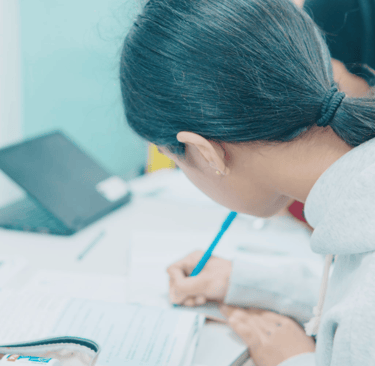
The Role of GCSE Tutors in Education
Does this sound familiar? Your child is hunched over a textbook, looking frustrated. You want to help, but the way they teach Maths or English today seems different. You’re not alone, and for many parents, this is the moment they start considering if their child needs more support.
With school resources stretched and exam pressure mounting, the question of whether GCSE tutors are worth the cost is a common and valid concern. It’s a significant decision, driven by the desire to see your child regain confidence and reduce the stress that exams can bring into the home.
This guide demystifies the role of GCSE tutors, explains what an effective one does, and provides the clarity needed to decide if tutoring is the right choice for your family.
What Do GCSE Tutors Actually Do That Teachers Can't?
It’s a simple matter of numbers. Even the most dedicated teacher must divide their attention between 25 or 30 students, each with different questions and learning speeds. What a GCSE tutor offers is the luxury of undivided focus. This isn’t about replacing the teacher but supplementing their work in a way that’s impossible in a full classroom.
This one-to-one time allows for something powerful: teaching in a way that works specifically for your child. If a concept in trigonometry or a theme in An Inspector Calls doesn't land the first time, a tutor can re-explain it using a different example, a simple drawing, or a real-world analogy. They can keep trying new approaches until that "lightbulb moment" happens—a flexibility almost impossible in a busy school schedule.
Perhaps most importantly, this private setting creates a safe space. Many students are reluctant to raise their hand in class, worried about asking a "silly" question in front of their friends. With a tutor, that fear disappears. They can freely admit, “I completely forgot how to do this,” without judgment, allowing the tutor to get to the real root of a problem.
Beyond Homework Help: How Tutors Find and Fix Hidden Knowledge Gaps
When your child says, “I just don’t get it,” the problem often isn’t the topic they are staring at today. Instead, it’s a shaky foundation from months or even years ago. Imagine their knowledge as a tower of blocks; if a key concept from Year 9—like handling fractions—was never fully mastered, everything built on top, like advanced algebra in Year 10, will feel unstable. These are “knowledge gaps,” the hidden cracks in understanding that can undermine a student’s confidence.
A good tutor acts like a detective. Their first job isn’t just to tackle the immediate homework but to investigate why it’s difficult. Through targeted questions and simple diagnostic exercises, they can pinpoint exactly where that wobbly block is. This diagnostic work is key to creating effective, personalised learning plans for GCSEs. They don't just patch over the symptoms; they find and fix the root cause.
By going back to fill that gap, the tutor does more than solve an old problem—they unlock future learning. Once the foundation is solid, new information finally has something to connect to, stopping the frustrating cycle of confusion. This strategy is highly effective for improving GCSE grades because the student doesn't just get help for one test; they build the underlying skill and confidence needed to tackle the next topic.
Why Knowing the Subject Isn't Enough: A Tutor's Role in Mastering Exam Technique
It’s a frustratingly common story: your child seems to understand their subject well during revision, but their exam results don’t reflect it. They might run out of time, misread a crucial question, or write pages for a question worth only two marks. This happens when a student has strong subject knowledge but lacks exam technique—a separate and equally important skill. Knowing the facts is only half the battle; knowing how to prove it under pressure is the other half.
So, what exactly is "exam technique"? Think of it as the practical strategy for the exam hall. A tutor specialising in this area teaches a student how to:
Manage the clock so every question gets the attention it deserves.
Understand what a question is really asking by decoding keywords like "analyse," "compare," or "evaluate."
Structure answers to hit the specific points an examiner is looking for on their mark scheme.
This is where a tutor's role in GCSE revision strategy becomes crucial. They don't just hand over a stack of past papers; they transform them into training tools. A tutor will work through a paper with your child, pausing to ask, “Why is this question phrased this way?” or “Let’s look at the mark scheme and see exactly where the points are awarded.” This process demystifies the exam, turning it from a daunting unknown into a predictable format that can be mastered.
By making exam technique a focus, a tutor offers a direct path to improving grades. A student who learns to showcase their knowledge effectively can see a significant jump in their results, often without needing to learn new content. They walk into the exam hall not just with knowledge but with a clear plan of action—a powerful foundation for academic confidence.
The Confidence-Booster: How Tutoring Rebuilds a Student's Self-Belief
Beyond grades, one of the most damaging obstacles a student can face is self-doubt. It often begins a vicious cycle: a poor mark leads to the thought “I’m just not good at this subject,” which makes them afraid to try. This creates a Confidence-Failure Cycle, where low self-esteem causes poorer performance, confirming their negative belief. For a child stuck in this loop, school can become a source of daily anxiety.
A great tutor’s first job is to break this cycle. In the one-to-one setting, a student can finally ask the "silly" question they were too embarrassed to voice in class. By breaking daunting topics into small, achievable wins—mastering one type of equation, correctly identifying one poetic device—a tutor helps them collect moments of success. This is how tutoring builds student confidence, as each small victory chips away at the "I can't" mindset, slowly replacing it with a quiet, growing "I can."
Crucially, this newfound self-belief travels back with them to the classroom. A student who feels more capable is more likely to put their hand up, engage in discussions, and approach homework with resilience instead of dread. This shift shows the real long-term impact of GCSE tuition: it’s an investment not just in a grade, but in a more engaged learner.
Online vs. In-Person, Group vs. One-to-One: Which Tutoring Format is Right for Your Child?
Once you've decided a tutor could help, the next question is a practical one: what kind is best? The primary choice is between group tuition vs one-to-one for GCSE. The dedicated focus that comes with the benefits of a private GCSE tutor is ideal for tackling significant knowledge gaps or rebuilding fragile confidence. In contrast, small group sessions can be more budget-friendly and are a great fit for students who thrive on peer interaction and aren't too far behind.
Layered on top of that is the question of location: online GCSE tutor vs in-person. Traditional in-person tutoring provides a tangible presence that can be brilliant for keeping younger or easily distracted students engaged. However, online sessions offer huge advantages in convenience and choice, opening up access to specialist tutors from anywhere.
To help you decide, here is a simple framework. The best format ultimately balances your child’s learning style with your family's practical needs.
Quick-Look Guide
One-to-One: Best for significant knowledge gaps or low confidence.
Group Tuition: Best for cost-effectiveness and students who enjoy peer learning.
In-Person: Best for younger students or those who are easily distracted.
Online: Best for convenience, wider tutor choice, and tech-savvy students.
Once you’ve settled on the right approach, the next step is finding the perfect person for the job.
How to Choose a Good GCSE Tutor: 5 Key Questions Every Parent Should Ask
Knowing you want a tutor is one thing; finding the right one can feel like searching for a needle in a haystack. Beyond subject expertise, you need someone who can connect with your child and deliver real results. This checklist provides a clear framework for any introductory call, turning a daunting task into a confident decision.
When you speak to a potential tutor, asking these five questions will tell you almost everything you need to know:
How do you assess a new student’s starting point and specific needs?
Can you give me an example of how you've helped a student with a similar goal or challenge?
How do you keep parents updated on progress?
Are you familiar with the specific exam boards and syllabus my child's school uses?
Do you have an up-to-date DBS check (criminal record check) I can see?
An experienced professional will welcome these questions and have clear, confident answers. They should talk about initial assessments, regular feedback, and be able to prove their familiarity with your child’s curriculum. Most importantly, a non-negotiable for safety is a current DBS check. Vague responses or hesitation on this front are major red flags.
Beyond the Grades: Is a GCSE Tutor Really Worth the Investment?
You began this journey wondering if extra help was the right answer for your child's exam stress. Now, you can see beyond the grades to what’s truly possible: transforming a student's frustration into a feeling of control over their own learning. You’re no longer just weighing up test scores, but considering an investment in their confidence.
A tutor’s work goes far beyond homework help. By finding and filling foundational gaps, teaching the specific strategies needed to succeed in exams, and creating a space where it's safe to ask questions, they help turn "I can't do this" into a quiet, growing "I can." This shift is where the real value lies.
So, are GCSE tutors worth the cost? When you consider the long-term impact of GCSE tuition—less stress at home, a more resilient student, and study skills for the years ahead—the role of GCSE tutors becomes clear. It’s an investment not just in a certificate, but in the capable and confident young adult they are becoming.
Excel Tutors
Empowering young learners to achieve academic excellence through tuition.
Excel Tutors is a Limited Company in England and Wales with registration number 07417709.
© 2026. All rights reserved by Excel Tutors.
Designed, Developed and Maintained By Blueprint Design Lab