
Find GCSE Past Papers Online Free: Exam Prep Guide
Discover where to find GCSE past papers online for effective exam revision. Access official resources and boost your grades with our step-by-step guide.
11+ EXAMS
Arif
2/5/20264 min read

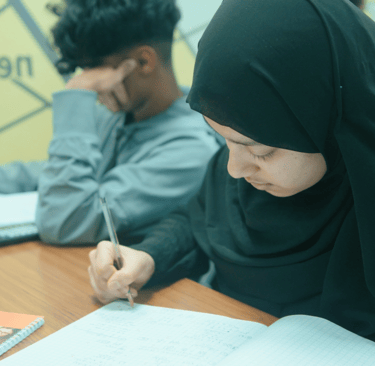
Where to Find GCSE Past Papers Online
GCSE revision season is here, and you've probably been told to "just do past papers" a thousand times. But where do you actually find the right ones online without hitting a dozen dead ends or confusing websites? It’s a common and frustrating problem.
Working through past papers is one of the most effective forms of revision. Nothing else prepares you so well for the real exam’s question styles, mark allocation, and time pressure. They are the single best way to understand what examiners are looking for.
This guide shows you exactly where to find official GCSE past papers online—for free—and provides a clear, stress-free plan to get the resources you need.
The First and Most Important Step: What is Your Exam Board?
Before you search for any past papers, there’s one crucial piece of information you need: your exam board. Think of exam boards—the main ones being AQA, Edexcel, and OCR—as the different companies that create the tests. For the same subject, like Maths or English, their exam questions and structure can vary, so you must use the right one.
Using a paper from the wrong board is like training for the wrong race—a waste of precious revision time. So, how do you find your exam board? The easiest and most reliable way is to simply ask your subject teacher. They work with these materials every day and can tell you in seconds which board your school uses for each subject.
You can also often find the board's name or logo printed on the front of your textbooks or exercise books. Knowing the right board is the key that unlocks everything. You're now ready to find the powerful "revision trio": the past paper, its mark scheme, and the examiner's report.
Unlocking the "Revision Trio": Papers, Mark Schemes, and Examiner Reports
Finding a past paper is a great start, but it's only the first step. To know if your answers would actually earn marks, you need the mark scheme. This isn't just an answer key; it's the official guide showing what examiners look for—from specific keywords to the steps in a calculation. It’s essential for learning how to mark past papers accurately and see where every point comes from.
The secret weapon in this trio is the examiner's report. In this document, the senior examiner explains where thousands of students went wrong and what the best students did right. Reading it is like getting insider tips on which common mistakes to avoid and where you can pick up easy marks that others missed, making your revision much more effective.
These three resources—the paper, the mark scheme, and the report—are designed to work as a team. When searching for past papers with mark schemes and examiner reports, always download the complete set. This simple habit turns basic practice into smart revision that directly boosts your confidence and grades.
The Official Sources: Direct Links to Free GCSE Past Papers
The best and safest place to get past papers is directly from the exam boards. This guarantees you are using the official exam papers, mark schemes, and examiner reports—all for free. Since you know which exam board you need, you can go straight to the source.
Here are the direct links to the main UK exam board archives. Remember to bookmark the one you need for each of your subjects.
Navigating these sites is usually straightforward. Once you arrive, look for a menu item like 'Subjects' or 'Qualifications'. From there, pick your subject and find the page for 'Assessment' or 'Past papers and mark schemes'. All the files are typically available to download as PDFs.
Sticking to these official websites is vital. It ensures the resources are up-to-date and the mark schemes are 100% accurate, so you can trust your revision.
Are Old GCSE Past Papers (Pre-2018) Still Useful for Revision?
You’ll find many papers dated before 2018, but use them with caution. Around that time, a major GCSE specification change introduced the 9-1 grading system. A 'specification' is the official blueprint for your exam, and this change means the content, structure, and question styles of older papers are now different from the exam you will sit.
This doesn’t make them useless, though. Instead of using an old paper for a full, timed mock exam, treat it as a bonus question bank. For example, you can use an old science paper to practice a specific topic like electricity, even if the overall paper format is outdated. It's excellent for targeted skill practice when you’ve run out of recent material.
Your priority, however, should always be the most recent papers available. They give you the most accurate preview of the exam format and question style you’ll face.
How to Turn Past Papers into Better Grades: A 3-Step Strategy
Downloading a past paper is the easy part; the real value comes from how you use it. Instead of just reading through questions, you can turn each paper into a powerful revision tool that directly targets your weaknesses. This simple, repeatable process is the key to making real progress.
Follow these three steps to turn practice into points on exam day:
Recreate Exam Conditions. Don’t just casually answer questions. Set a timer for the correct duration, put your phone and notes away, and work in silence. This trains you to perform under pressure and manage your time effectively.
Mark It Like an Examiner. Once finished, grab a different coloured pen and the mark scheme. Be ruthless. If your answer doesn’t match what the scheme asks for, don’t give yourself the mark. This is crucial for understanding exactly how points are won and lost.
Hunt for Improvement. Your wrong answers are a goldmine. Create a list of every question you got wrong or felt unsure about. These topics are now your top revision priorities. This "do, mark, improve" cycle is far more effective than just re-reading textbooks because it focuses your effort precisely where you need it most.
Your Quick-Action Checklist for Past Paper Success
You’re ready to turn revision confusion into exam confidence. You now have a clear path to finding the right GCSE past papers and a map to the most effective revision resources.
Your powerful GCSE revision plan starts now. Use this checklist to take your first, confident step toward mastering your exams. You’ve got this.
☐ Find out your exam board for each subject.
☐ Download a recent paper, mark scheme, and examiner's report from the official website.
☐ Complete the paper under timed conditions.
☐ Mark your work honestly and identify one area to improve.
Excel Tutors
Empowering young learners to achieve academic excellence through tuition.
Excel Tutors is a Limited Company in England and Wales with registration number 07417709.
© 2026. All rights reserved by Excel Tutors.
Designed, Developed and Maintained By Blueprint Design Lab