
Effective GCSE Maths Study Tips: Boost Your Exam Success
Unlock effective study strategies for GCSE Maths that boost retention and understanding. Learn how Active Recall, Spaced Repetition, and Interleaving can transform your revision process.
EXAMS
Fatima Noor
2/5/20264 min read

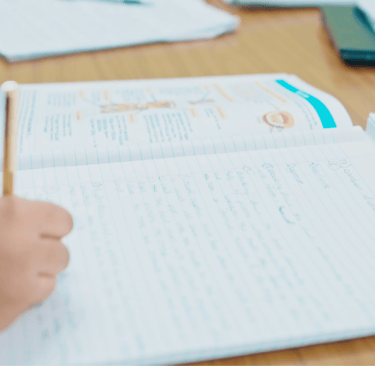
Effective Study Strategies for GCSE Maths
What’s the most common advice for GCSE Maths revision? “Just do more past papers.” While practice is vital, it’s only half the story. If you aren't learning from your mistakes or mixing up topics, you're likely practicing the same errors, feeling like nothing is sinking in.
This frustration often stems from passive revision. Research shows our brains don’t build strong memories by simply re-reading notes. To make learning stick, you must actively pull the knowledge out, forcing your brain to work and build connections. A few simple tweaks to your routine can make all the difference, based on a proven system: build your foundation, practice actively, and learn from every mistake.
Build Your Blueprint: A Simple 20-Minute Revision Plan
Staring at a mountain of maths revision can feel overwhelming. The secret isn't studying for hours, but studying smart. A great way to start is with the Pomodoro Technique: work for just 25 minutes, then take a 5-minute break. This prevents burnout and makes creating a revision timetable feel manageable.
But what should you revise? Don't guess. Every exam board has an official topic list called a "specification." This is your checklist, telling you exactly what can appear on your exam. Understanding your exam board is crucial so you only study what you need.
You can find this list for free on your exam board’s website. The main ones are:
AQA
Edexcel
OCR
With this list, your weekly plan becomes simple: Monday (25 mins on Percentages), Wednesday (25 mins on Pythagoras). But just reading notes isn't enough to make that information stick.
The 'Test-Yourself' Trick: How Active Recall Makes Formulas Stick
Re-reading notes is like watching someone else exercise and hoping to get stronger yourself. A far better method is Active Recall. This simply means testing yourself—pulling information out of your brain instead of passively putting it in. It’s a proven game-changer for making facts and formulas stick.
The easiest way to start is with flashcards. On one side, write a prompt like, “Area of a Trapezium?”. On the other, the formula: ½(a+b)h. Before you flip the card, genuinely try to recall the answer. This simple action forces your brain to build and strengthen the neural pathway to that information.
Image: A simple photo of a handwritten flashcard. On one side: "Area of a Trapezium?". On the other side: "1/2(a+b)h"
This will feel more difficult than just reading, but that’s a good thing. The mental effort is a sign you’re building a strong, lasting memory. To lock that knowledge in for good, the secret is knowing when to test yourself.
Stop Forgetting Topics: Using Spaced Repetition for Long-Term Memory
Ever learned a topic, only to forget it a week later? Knowing how to test yourself is half the battle; knowing when is the secret ingredient. This powerful technique is called Spaced Repetition.
Think of a memory like a path in the woods: revisiting it every few days makes it strong and easy to follow. Forcing your brain to recall information just as you start to forget it makes the memory more permanent. A little forgetting is a crucial part of the process.
Instead of cramming, try this simple spaced repetition schedule for any new topic:
Day 1: Learn the topic (e.g., factorising quadratics).
Day 3: Quick 5-minute review using active recall.
Day 7: Review again (5-10 mins).
Day 21: A final check-in before a test.
This pattern builds a reliable memory bank for your exam and works perfectly alongside an interleaving study method.
Past Papers vs. Practice Questions: Learning From Your Mistakes
Many students believe grinding through endless past papers is the only path to a good grade. While exam practice is crucial, it's important to differentiate practice. Think of a timed past paper as your ‘match day’ performance test. Practice questions, however, are your training sessions—the place to learn without the pressure of a running clock.
The real goal of these sessions isn't to score 100%, but to find out where you go wrong. Every mistake is an invaluable clue that shines a spotlight on a knowledge gap you can fix before the real exam.
To turn these clues into progress, start a Mistake Journal. When you get a question wrong, don’t just glance at the mark scheme. In a notebook, write down the question, explain your error in simple terms, and detail the correct method. This active process cements the learning far more effectively than just re-reading.
Why 'Blocking' Topics Hurts Your Grade: The Power of Interleaving
It’s tempting to dedicate an entire evening to one topic, like algebra. This method, ‘block studying,’ feels productive but doesn’t prepare you for the exam, which will be a jumbled mix of everything.
A far more effective strategy is interleaving. Think of it like a footballer's training: they mix passing, dribbling, and shooting to prepare for the randomness of a match. Interleaving does the same for your brain, training it to switch between different types of problems.
In practice, instead of an hour on trigonometry, try 20 minutes of trigonometry, 20 minutes of percentages, and 20 minutes of probability. This forces your brain to retrieve different rules and formulas, making your memory stronger and more flexible for exam day.
What to Do When You're Stuck or Anxious
It's a horrible feeling when your mind goes blank. Instead of panicking, use specific techniques to regain control during revision and in the exam.
During revision, try the Feynman Technique. Pretend to teach the topic to someone who knows nothing about it. The exact moment you get stuck explaining is the precise gap in your understanding that you need to fix.
In the exam, shift your focus from the final answer to method marks. Examiners award points for showing your steps—like writing the right formula or doing the first calculation. You can collect valuable credit even if your final answer is wrong. This reduces pressure and builds real confidence.
Your 3-Step Action Plan for Confident Maths Revision
You no longer have to guess what works. Instead of facing revision with no direction, you now have the tools to build a focused, effective plan. This confidence comes from having a smart strategy.
Your three most powerful actions are:
PLAN: Create a specific timetable using your exam board’s topic list.
PRACTICE SMART: Test yourself with Active Recall and mix up topics with Interleaving.
PERFECT: Use a Mistake Journal to learn from every single error.
Remember, it’s not about being a “maths person”—it’s about having the right method. Put these strategies into practice today using free maths revision resources online, like Corbettmaths and BBC Bitesize, for videos and practice questions.
Excel Tutors
Empowering young learners to achieve academic excellence through tuition.
Excel Tutors is a Limited Company in England and Wales with registration number 07417709.
© 2026. All rights reserved by Excel Tutors.
Designed, Developed and Maintained By Blueprint Design Lab